 Algae AwareInitiative
About us
Algae Aware Initiative is a student-led 501(c)(3) nonprofit started at Trinity Preparatory School in Central Florida, with 50+ student members. We build water test kits, share what people find on the Water Atlas, and teach how rain carries fertilizer into lakes.
Our mission
“Creating kits to fight harmful algal blooms and protect Earth's waterways, one community at a time.”
Our kits let you test the water near your home for nitrate, phosphate, and pH. You can share what you find on the Water Atlas.
Read the kit guideWe explain where algae gets its food, and what each of us can change at home to cut what washes off a yard.
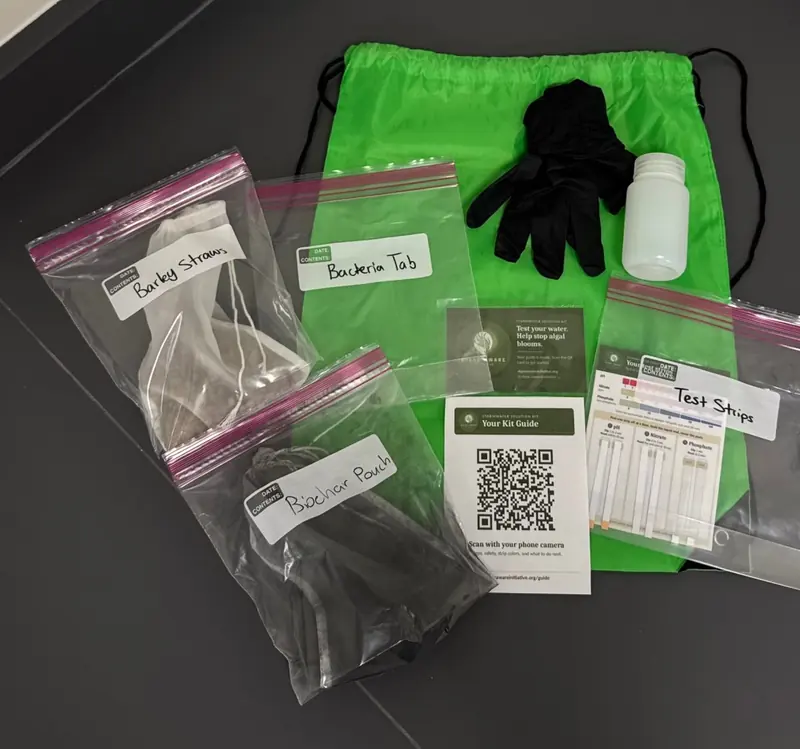
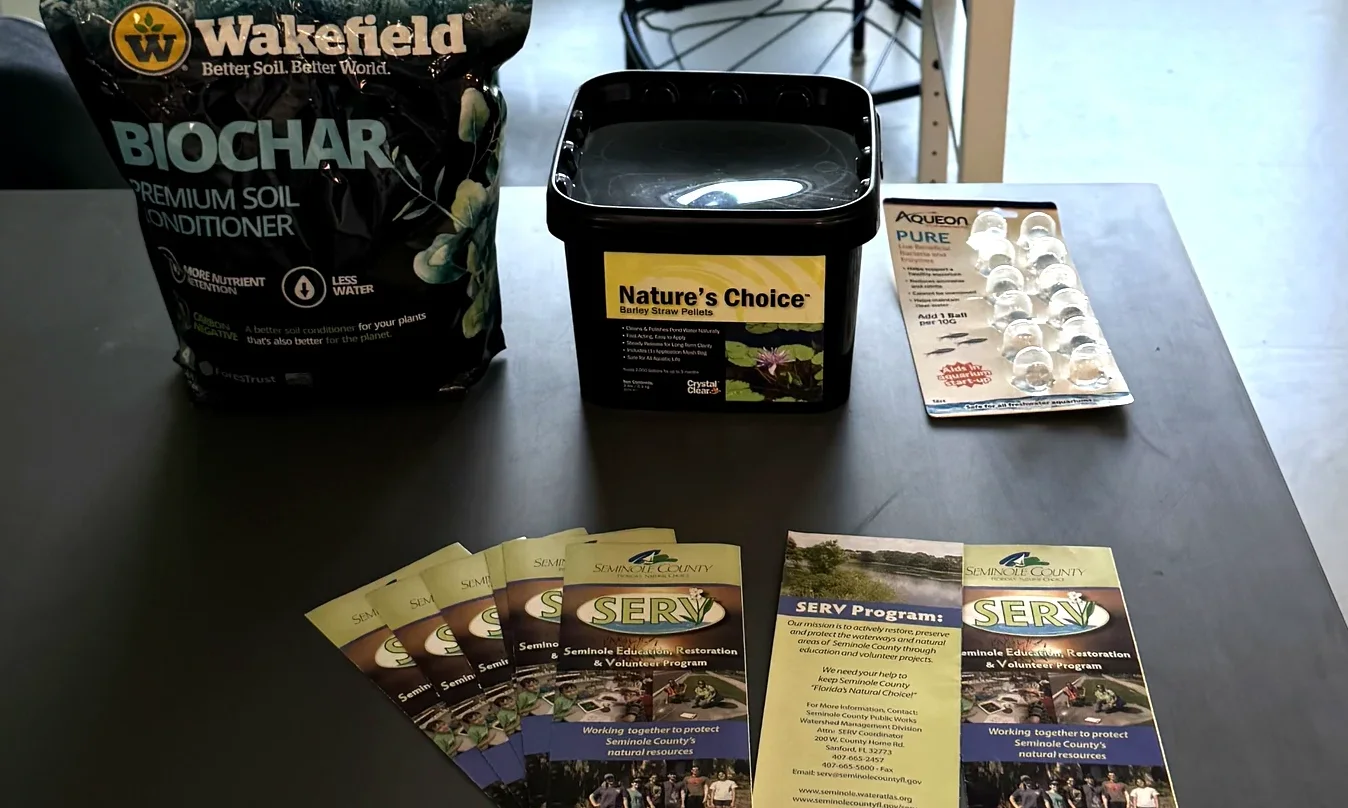
Follow the waterEach kit has a barley straw pouch, a bacteria tab, and a biochar pouch to use on your own property, never in a public waterway.
Using the action itemsFollow the water
Follow one rainstorm through a Florida neighborhood. On a dry day, fertilizer, grass clippings and pet waste leave nitrogen and phosphorus on lawns and streets.
Stormwater sweeps those nutrients off driveways and gutters and into the nearest storm drain.
Most storm drains carry runoff straight to a pond, lake or river through an underground pipe.
Algae need nutrients. Given too much, they can bloom: clouding the water, using up oxygen and, in some blooms, producing toxins.
Repeated nitrate, phosphate and pH readings show where nutrients are building up, and where changes on land could help.
The science, from the U.S. EPA26%of the nitrogen reaching groundwater around Wekiwa and Rock springs comes from lawn fertilizer. That is the part of the problem each of us can change at home.
Source: Florida DEP, Wekiwa Spring and Rock Springs Basin Management Action Plan, 2018.
The kit
Test the water near your home, then use your kit to help keep algae out.
Test
Shows what's in the water.
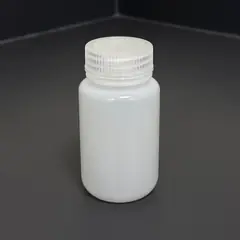 Sample bottle 4 oz (about 120 mL). Holds the water you test.
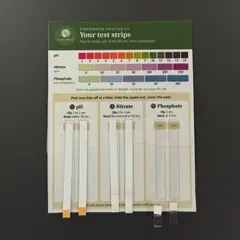 Test strips 2 each of nitrate, phosphate, and pH. Keep them sealed and dry.
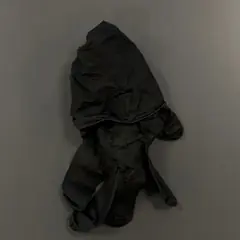 Gloves 1 pair of black nitrile gloves. Wear them when you touch the water.
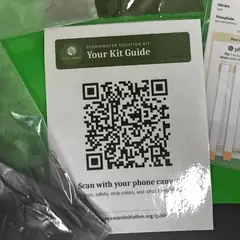 QR card and strip card The QR card opens this page. The strip card shows which strip is which and the colors to match.
Act
Helps keep algae from growing.
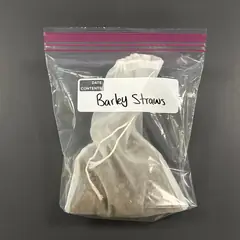 Barley straw pouch White mesh bag of pellets.
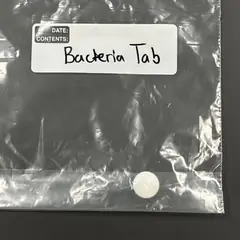 Bacteria tab 1 white tablet in a labeled bag.
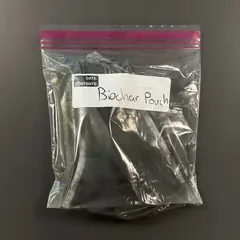 Biochar pouch Gray cloth bag.
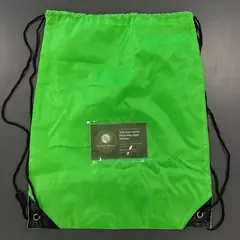 Drawstring bag Green bag that holds it all. Keep it and reuse it.
Our story
Why does the water turn green? A few students started asking, and then started building tools to find out.
Seminole County's Education, Restoration and Volunteer program visited our school to explain how they check water, including the Secchi disk.
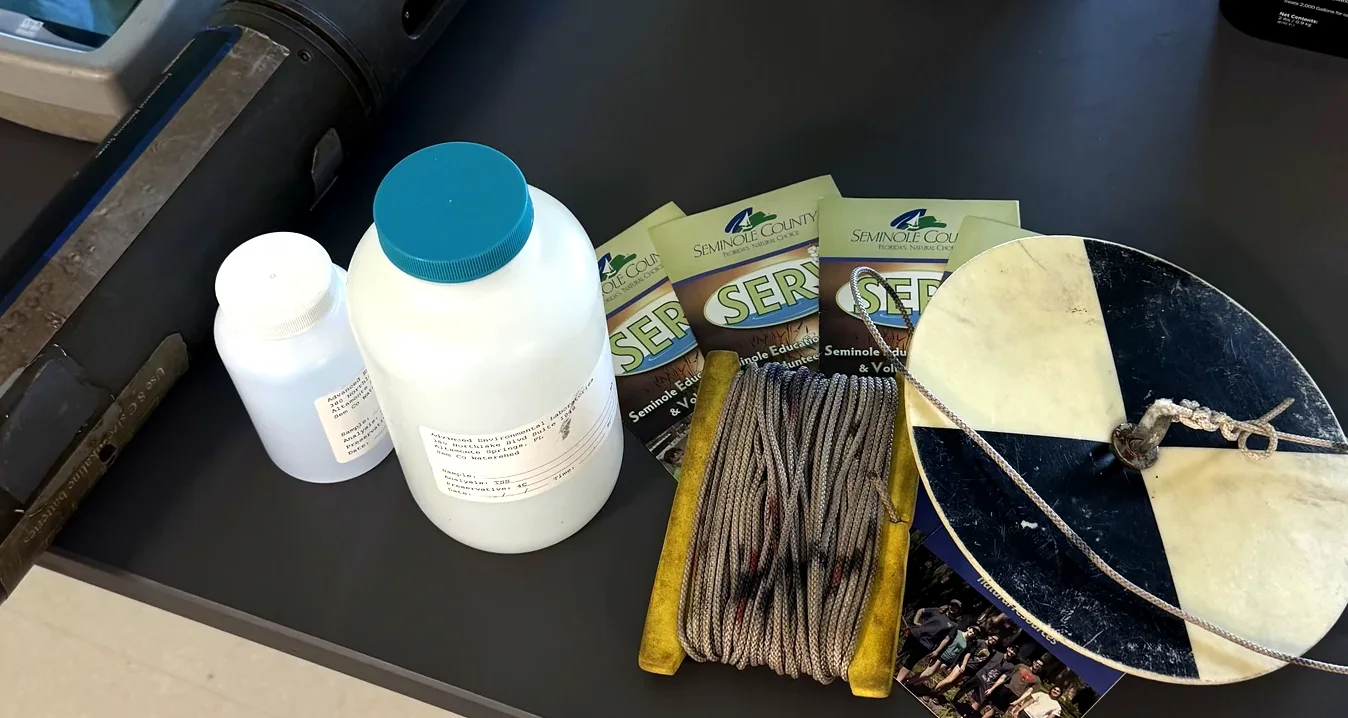
We presented our kits and ideas to the board, and we're exploring how students can help with monitoring, education, and care for the river.
We're putting the first kits together in small batches and improving the kit guide as we go.
Our team
More than 50 students are members. Questions about your kit, or want to work with us? Email us.